

Haleem in London
Slow-cooked, deeply savoury and made for tearing into with warm naan. Discover traditional Shahi Haleem at Spice Village in Tooting and Southall.
Looking for Authentic Haleem in London?
Haleem is comfort food that cannot be rushed. Meat, lentils and spices are cooked slowly until their individual textures come together into the thick, rich consistency that defines the dish.
At Spice Village, our Shahi Haleem is a traditional Lahori-style dish prepared with lamb, lentils and spices. It is hearty without being heavy on chilli, with slow cooking giving the lamb time to soften and the lentils time to become smooth and full-bodied.
If you are searching for haleem near you in London, you can enjoy it at our Pakistani restaurants in Tooting and Southall.
Why Haleem Has Earned Its Place at the Pakistani Table
Some dishes depend on fresh ingredients cooked quickly. Haleem is almost the opposite.
Its character develops through patience. Lentils soften, meat becomes tender and spices settle into the mixture as everything cooks together. The result is a consistency somewhere between a stew and a thick savoury porridge, with the meat worked through the dish rather than sitting in separate pieces.
A good haleem should have depth without tasting muddy or one-dimensional.
You get the richness of slow-cooked meat, the earthiness of lentils and a warming layer of spice in every spoonful. Depending on how it is served, fresh ginger, coriander, chilli or lemon can then bring sharpness and freshness to the finished dish.
It is the sort of food that feels particularly satisfying when eaten hot with fresh naan.
What Makes Our Shahi Haleem Worth Trying?
Our haleem stays close to the style of food Spice Village was built around: familiar Pakistani dishes cooked with patience and meant to be eaten around a shared table.
You can expect:
- Lamb and lentils cooked together for a rich, cohesive texture
- Traditional spices rather than heat for heat's sake
- A thick consistency that holds onto every mouthful of flavour
- A satisfying main dish that pairs naturally with naan
- Halal Pakistani food served at our London restaurants
- A Lahori-style haleem rather than a generic version designed to cover several regional styles at once
For guests who already know haleem, it is a familiar dish worth returning to. For anyone ordering it for the first time, it is also one of the best introductions to the slower, more comforting side of Pakistani cooking.
Haleem Is a Dish Built on Time
The texture is one of the first things people notice about authentic haleem.
It does not resemble an ordinary lamb curry, where pieces of meat sit separately in a sauce. During the cooking process, the meat and pulses gradually soften and combine. Traditionally, the mixture is stirred and worked until the ingredients become thick and almost creamy while still retaining enough texture to make each spoonful substantial.
That is why shortcuts are easy to spot.
Instant haleem mixes and ready-made spice blends can recreate some of the seasoning at home, but the character of restaurant haleem comes from the complete cooking process. Meat needs time to tenderise. Lentils need to break down. Spices need time to lose their raw edge and become part of the dish.
The final flavour is not created by a single haleem spice. It comes from how the ingredients behave together over a long cook.
Lahori Haleem, Hyderabadi Haleem and Other Regional Styles
Search for haleem and you will quickly find several regional names attached to it.
Hyderabadi haleem is particularly famous and has a strong association with Hyderabad in India, especially during Ramadan. Pakistani haleem has its own regional traditions, with different households and restaurants varying the choice of meat, grains, pulses, seasoning and garnishes.
Spice Village serves Shahi Haleem in a traditional Lahori style. Our restaurant version is made with lamb and lentils rather than presented as Hyderabadi haleem.
That distinction matters.
If someone is specifically looking for Hyderabadi chicken haleem, beef haleem, goat haleem or a Bangladeshi-style haleem, those can be different dishes with their own ingredients and regional character. We would rather tell you clearly what is in ours than attach every popular haleem name to the same bowl.
Lamb Haleem Rather Than Beef or Chicken Haleem
Haleem can be made with several types of meat.
Across different regions and kitchens you will find beef haleem, chicken haleem, mutton haleem and versions made with goat. Changes in the meat naturally affect the richness, texture and overall flavour of the dish.
Spice Village’s Shahi Haleem is prepared with lamb.
Lamb works particularly well with the slow-cooking method because its savoury richness stands up to lentils and warming spices. As it cooks down, the meat becomes part of the texture of the haleem rather than remaining separate from it.
If you are choosing between haleem and a conventional lamb curry, expect a very different eating experience. Haleem is thicker, softer and more integrated, with every spoonful carrying the meat, pulses and seasoning together.
Haleem and Naan: A Simple Combination That Works
You do not need a complicated collection of sides to enjoy haleem.
Fresh naan is one of the most natural accompaniments. Tear off a piece and use it to scoop up the thick haleem, or alternate between spoonfuls of the dish and warm bread.
The mild wheat flavour of naan works particularly well because it does not compete with the seasoning of the haleem.
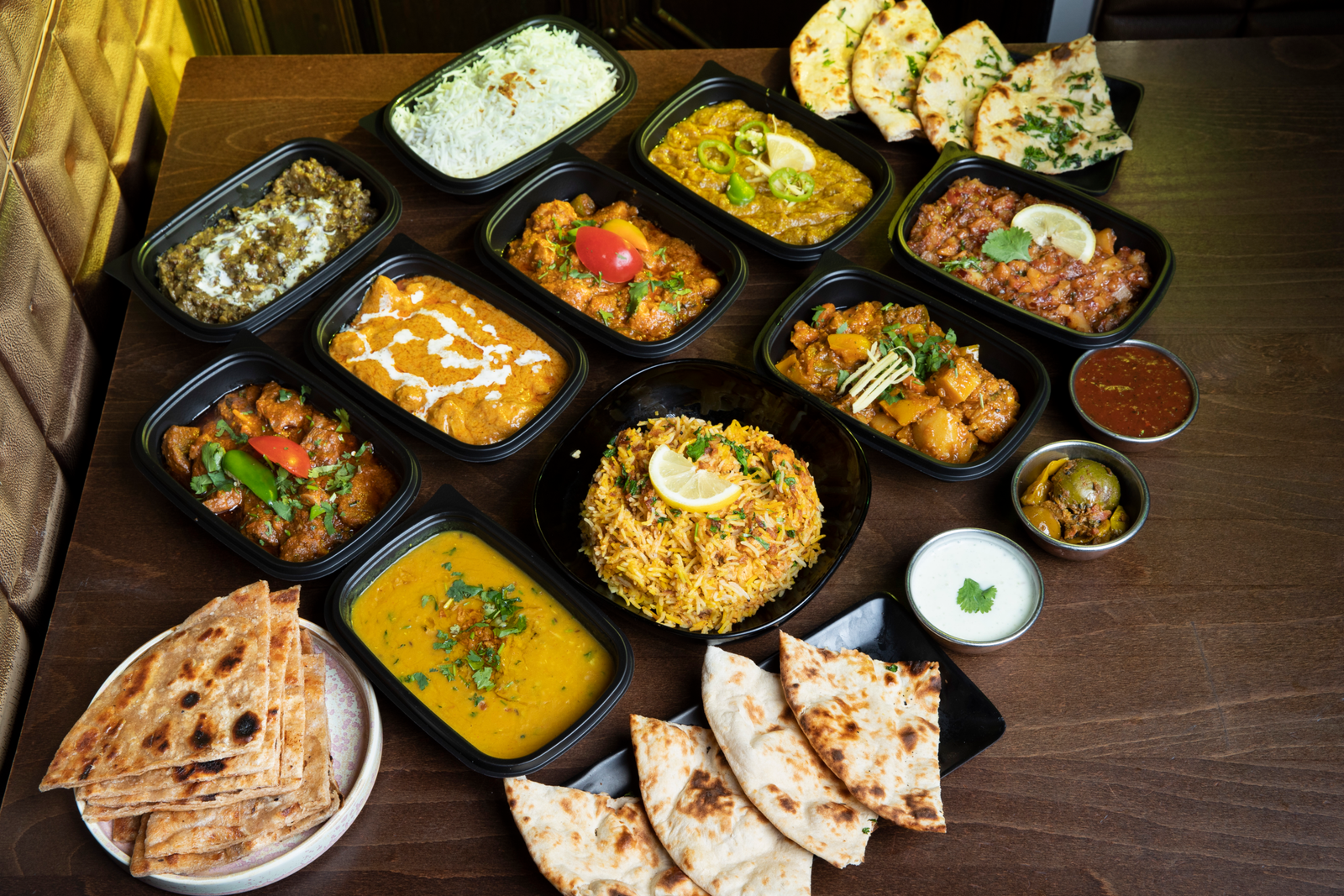
For a larger meal, haleem can also sit alongside other Pakistani favourites. It works well when sharing several dishes between the table, particularly if some guests want grilled meats while others prefer karahi, biryani or slow-cooked specialities.
A squeeze of lemon or fresh garnishes can provide contrast to the richness too.

A Favourite for Ramadan, Family Meals and Colder Days
Haleem has long been associated with communal eating.
Its slow-cooked nature makes it particularly suited to preparing in quantity and sharing, and the dish is closely connected with religious gatherings and family occasions across parts of South Asia. It is especially well known as a Ramadan dish, when its rich combination of meat and pulses makes it a popular choice after a day of fasting.
But haleem does not need a special occasion.
In a London restaurant, it works just as well as a warming lunch, an evening meal with naan or one dish among several shared by the family.
There is something reassuring about food that has been allowed to cook slowly. Especially when the weather outside makes a hot bowl of haleem sound far better than anything complicated.
Finding Haleem Near You
If a search for “haleem near me” or “halal haleem near me” has brought you here, Spice Village has restaurants in two parts of London.
Haleem in Tooting
Our Tooting restaurant is at 121 Upper Tooting Road, London SW17 7TJ.
Shahi Haleem appears among our Village Specials, alongside other Pakistani favourites including Lahori Nihari and Paaya.
Come in for a meal with family or friends, or check the current ordering options if you would rather eat at home.
Haleem in Southall
You can also find Spice Village at 185–189 The Broadway, Southall UB1 1LX.
Our Southall menu also includes traditional Shahi Haleem made with lamb, lentils and spices.
Pakistani Food Rooted in Tradition
Spice Village began with a small takeaway in Tooting in 2004 and has grown into restaurants and a wider hospitality group.
The food remains closely connected to Pakistani cooking and the dishes families recognise from home. Our restaurants use traditional cooking approaches including slow cooking, grills and tandoor cooking, depending on the dish.
Haleem belongs naturally in that kitchen.
It is not a dish that needs reinvention. Its appeal comes from the transformation that happens when straightforward ingredients are given enough time.
Lamb. Lentils. Spice. Heat. Patience.
By the time they reach the table, they have become something completely different.
Haleem FAQs
Haleem is a thick, slow-cooked dish made by combining meat with lentils, grains or pulses and spices. The ingredients are cooked until the meat becomes tender and the mixture develops its distinctive smooth, hearty texture.
Our Shahi Haleem is made with lamb, lentils and spices and is described on our restaurant menus as a traditional Lahori dish.
Yes. Spice Village restaurants serve halal Pakistani food.
Haleem is seasoned with spices, but that does not mean it has to be extremely hot. Its flavour comes from the combination of slow-cooked meat, lentils and seasoning rather than chilli alone.
Haleem varies between regions. Hyderabadi haleem has developed its own distinctive tradition in Hyderabad, while Pakistani versions can vary in ingredients and preparation. Spice Village serves a Lahori-style Shahi Haleem, not a dish presented as Hyderabadi haleem.
It can be. Different recipes use beef, chicken, lamb, mutton or goat. Spice Village’s restaurant version is made with lamb.
Naan is an excellent choice because the bread works well with haleem’s thick texture. Fresh lemon, ginger, coriander and chilli are also commonly used with different styles of haleem.
Haleem is particularly popular during Ramadan in many South Asian communities, although it is enjoyed throughout the year as well.
Spice Village serves Shahi Haleem at its restaurants in Tooting and Southall. Check the current restaurant menu and ordering options for your nearest branch.
Spice Village offers ordering options from its London restaurants. Availability can vary by branch and delivery area, so check your nearest restaurant when ordering.
Try Shahi Haleem at Spice Village
Some Pakistani dishes announce themselves with sizzling grills and clouds of smoke.
Haleem takes another route.
Its flavour comes quietly, built over hours of cooking until lamb, lentils and spice become one rich, warming dish. Add fresh naan, gather a few other favourites around the table and you have the kind of meal Spice Village has been serving London since 2004.
Visit us in Tooting or Southall for traditional Shahi Haleem.
