

Pakistani cuisine is difficult to explain with a single dish.
Biryani might be the first thing that comes to mind. Someone from Lahore may immediately think of karahi, grilled meat or a slow Sunday breakfast. In Karachi, the conversation could move towards biryani, bun kebab and food shaped by a city that has welcomed communities from across the subcontinent. Travel north and the cooking changes again, becoming increasingly influenced by meat, bread, fire and comparatively restrained seasoning.
That variety is part of what makes Pakistani food so rewarding.
For anyone discovering Pakistani cuisine in London, understanding a little of where the food comes from makes ordering much more interesting. It stops being a menu of unfamiliar names and begins to make sense as a collection of regional traditions, cooking techniques and dishes designed for different moments of the day.
Modern Pakistan stretches from the Arabian Sea to mountain regions bordering Central and South Asia. Its food reflects that geography.
Punjab is one of the country’s great agricultural regions, and Punjabi cooking has had an enormous influence on the Pakistani food familiar in Britain. Wheat breads, lentils, dairy, grilled meats, saag, kebabs and richly seasoned meat dishes all have a strong place at the table.
Sindhi cooking has its own character. Rice, meat, vegetables, sour flavours and generous use of spice appear in many traditional dishes, while Karachi has developed a food culture influenced by migration from across South Asia.
In Khyber Pakhtunkhwa and the north-west, meat and grilling become particularly important. Dishes may use fewer competing spices, allowing lamb, mutton or beef and the flavour of fire to stand more clearly on their own.
Balochi food has another identity again, with methods such as slow roasting and cooking meat over or around fire reflecting the landscape and local traditions.
These borders are not hard lines. Families move, recipes travel and neighbouring regions influence one another. But thinking regionally helps explain why two perfectly traditional Pakistani meals can taste completely different.
Pakistani cooking is sometimes described simply as “spicy”, but that does not tell you very much.
Chilli is only one part of the picture.
A dish can carry cumin, coriander seed, black pepper, cardamom, cloves, cinnamon, turmeric, ginger, garlic and fresh green chilli without tasting confused. The skill is in deciding which flavours should be noticeable and which should sit quietly underneath.
Cooking time matters too.
Onions may be browned until sweet and concentrated. Tomatoes can be cooked until their raw sharpness disappears. Meat can spend hours over gentle heat. Whole spices may perfume oil before any other ingredients enter the pan.
That is why a properly made nihari tastes completely different from a karahi even though both contain meat and spices.
Technique creates the difference.
If you want to understand Pakistani restaurant food, karahi is a useful place to begin.
The dish takes its name from the deep, rounded cooking vessel in which it is prepared. Rather than relying on a large quantity of pre-made sauce, karahi cooking typically builds flavour in the pan around meat, tomatoes, aromatics and seasoning.
Good karahi has a freshness that distinguishes it from heavier curries.
Tomato contributes acidity and sweetness. Ginger often remains clearly noticeable. Green chilli can bring both fragrance and heat. Fresh coriander lifts the finished dish.
Chicken karahi is approachable and comparatively quick to cook. Lamb or gosht karahi develops a richer character from the meat.
Then comes the important part: naan.
A piece of warm bread pulled through the concentrated sauce at the bottom of a karahi is one of those combinations that explains the dish better than a paragraph can.
Pakistani cuisine has a serious relationship with fire.
Chicken tikka, seekh kebab, lamb chops, chapli kebab and other grilled meats give you an entirely different experience from slow-cooked curries.
Marinades introduce spice, acidity and aromatics before the meat reaches the heat. The grill then concentrates those flavours, creating browned edges and small areas of char.
Seekh kebabs bring another texture entirely. Seasoned minced meat is shaped around skewers and cooked until the exterior browns while the centre remains juicy.
Chapli kebab, particularly associated with the north-west, is flatter and broader. Its rough surface creates plenty of browned edges during cooking.
A mixed grill is therefore not simply several versions of the same thing. Each cut, marinade and shape reacts differently to intense heat.
In London, where Pakistani restaurants are often visited by large families or groups of friends, grilled food also has a social advantage. Put a platter in the middle and everybody reaches in.
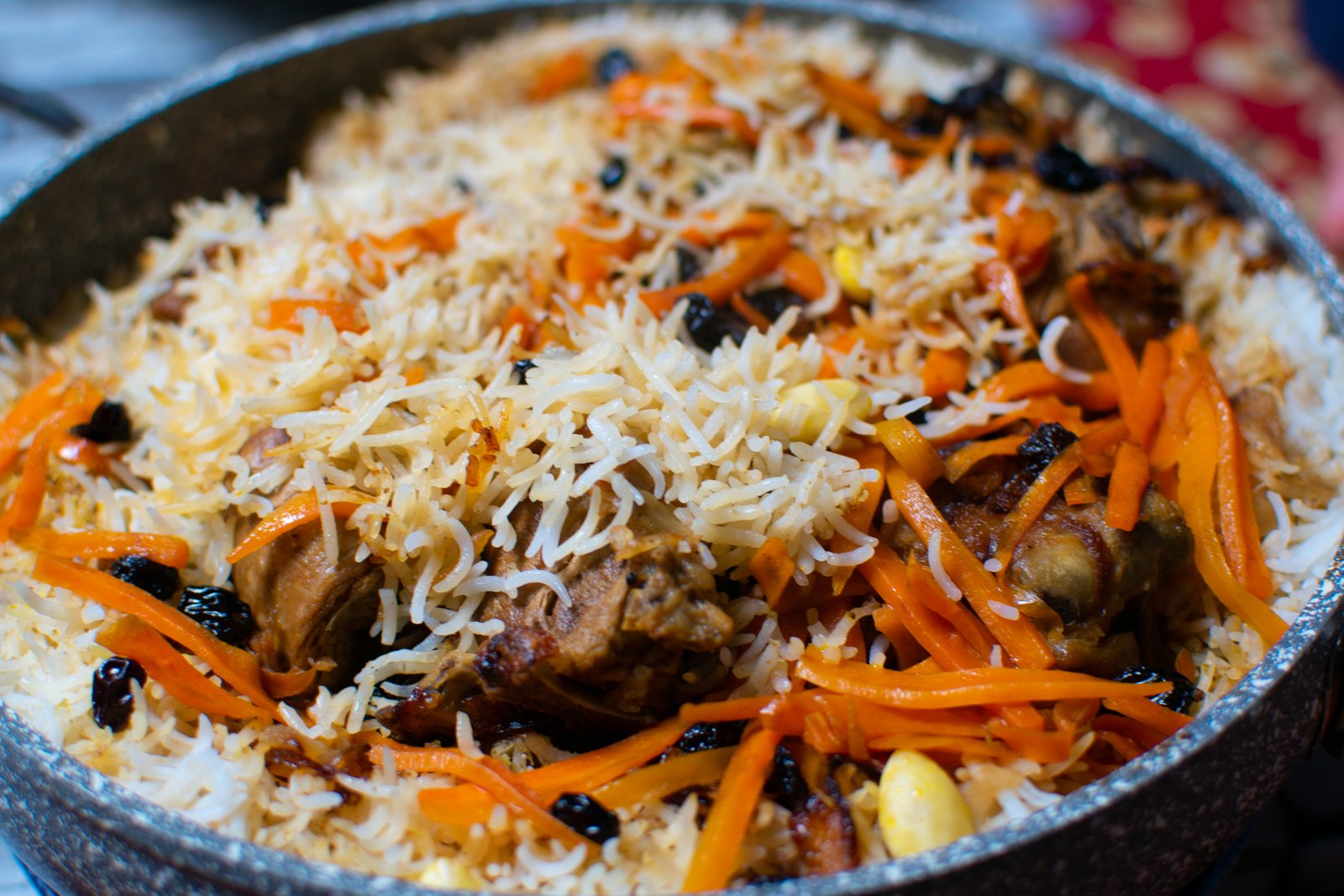
Biryani has travelled widely enough to become one of the world’s most recognisable South Asian foods.
It has also developed enough variations to start arguments at almost any family table.
Pakistani biryanis can vary dramatically. Karachi-style versions may be particularly aromatic and lively with chilli and acidity. Other versions are gentler, allowing meat, stock and fragrance to lead.
The important distinction is that biryani is not simply plain rice with curry mixed through it.
The rice needs its own character. Individual grains should retain definition rather than turning soft and heavy. Meat, masala and rice need to feel connected without becoming one uniform mixture.
Aromatic ingredients such as cardamom, cinnamon and cloves can sit alongside chilli, herbs and fried onions. Potatoes appear in some regional traditions and inspire surprisingly strong opinions in others.
Biryani is celebratory food, everyday food and serious comfort food all at once.
That is probably why nobody agrees on exactly what the perfect version should be.
Some of Pakistan’s most satisfying dishes make very little sense if they are rushed.
Nihari is built around slow-cooked meat and a deeply seasoned gravy. Traditionally associated with overnight cooking and morning eating, it has become an all-day favourite in restaurants and homes.
The texture of the meat matters enormously. Shank cuts respond to slow heat as connective tissue softens and contributes body to the surrounding gravy.
Fresh ginger, coriander, lemon and green chilli can then be added at the table, bringing brightness to something that has spent hours becoming rich.
Haleem goes further.
Meat, lentils and grains or pulses are cooked until their individual identities begin to merge. Rather than finding a piece of meat sitting in gravy, you get a thick, cohesive dish in which the ingredients have become part of the same texture.
They are very different dishes, but both make the same point.
Pakistani cooking is not always about adding more.
Sometimes the essential ingredient is time.
For anyone used to toast or cereal, a traditional Lahori breakfast can feel like changing food genres entirely.
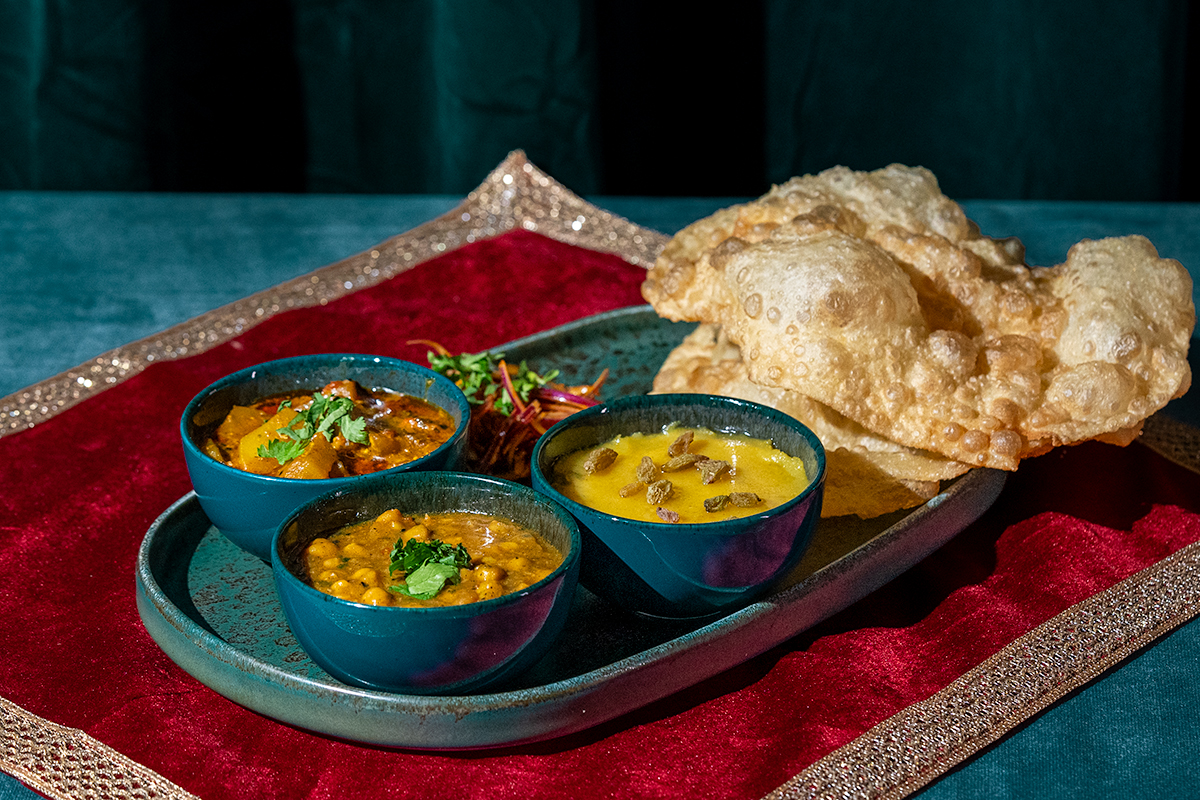
Halwa puri is perhaps the best-known example. Puffy fried puri is eaten with savoury chickpeas and sweet semolina halwa, creating a meal that moves between spice, richness and sweetness.
Nihari and paya may also appear at the breakfast table.
Paya is slowly cooked using trotters, producing a rich gravy with a texture created by prolonged cooking. It is commonly eaten with fresh bread and warming garnishes.
These are not necessarily everyday weekday breakfasts before commuting to work.
They belong particularly well to weekends, gatherings and mornings when there is enough time to sit down properly.
That tradition has travelled successfully to London. In areas with established Pakistani communities, weekend breakfasts remain a chance for families to eat together and for younger generations to experience dishes their parents or grandparents grew up with.
Bread is not merely an accompaniment in Pakistani food.
Naan can scoop up karahi. Roti works naturally with everyday vegetable dishes and daal. Roghni naan has a richer texture that suits a more substantial meal.
The way you eat with
bread changes the experience because sauce, meat and bread arrive in the same mouthful.
Rice serves another role.
Biryani can be the centrepiece itself, while pulao tends to be more restrained and is often built around stock, meat and aromatic seasoning.
Plain rice also matters because not every component needs to compete for attention. Beside a richly seasoned curry or daal, simplicity can be useful.
A good Pakistani table balances rather than maximises flavour.
Restaurant conversations often concentrate on meat, but lentils sit much closer to the heart of everyday South Asian eating.
Different lentils create different textures and flavours. Masoor, moong, chana and urad do not behave identically in the pot.
A simple daal can depend on a tarka: spices and aromatics heated in oil or ghee and poured into or combined with the cooked lentils. Garlic, cumin, chilli or onions suddenly change what appears to be an uncomplicated bowl of pulses.
Daal also provides balance on a large table.
Beside grilled meat, biryani and a rich karahi, a spoonful of lentils feels grounding rather than excessive.
It is one reason judging Pakistani cuisine only by its most extravagant dishes gives an incomplete picture.
Pakistani food is rich in contrast.
Raita cools. Lemon sharpens. Coriander freshens. Raw onion brings bite. Chutney can move from herbaceous to fiery in a single spoonful.
A kachumber-style salad of chopped cucumber, tomato and onion provides crunch next to softer cooked dishes.
These elements are not decorative.
Try eating rich grilled meat or biryani without anything acidic or fresh beside it and you notice their absence.
A well-built plate needs somewhere for the palate to go between the deeper flavours.
If the main meal has involved smoke, chilli and savoury spice, dessert often heads confidently towards milk, nuts, cardamom and syrup.
Gulab jamun gives you soft fried dumplings soaked in scented syrup.
Kheer cooks rice slowly with milk until it becomes creamy, often finished with cardamom and nuts.
Kulfi is denser than conventional ice cream and melts differently because of the way the milk mixture is prepared.
Gajar ka halwa turns grated carrots into a rich dessert through slow cooking with milk, fat, sugar and warming aromatics.
Then there is falooda, which can bring together milk, ice cream or kulfi, vermicelli and flavoured syrup in a dessert that is almost a drink and almost a meal of its own.
Subtle, it is not.
After a long Pakistani dinner, subtlety is not always what anyone wants.
A first Pakistani meal is better approached as a table than as a single dish.
Start with something from the grill so you understand the smoky side of the cuisine. Add a karahi or slow-cooked dish for depth. Put rice or biryani beside it, but bring naan as well. A daal or vegetable dish will give the meal balance, with raita, salad and chutney filling in the spaces between.
Then share.
Pakistani restaurant food makes much more sense when everybody can taste several things.
Ordering one curry per person and guarding it carefully misses part of the point.
London is a particularly interesting place to explore Pakistani cuisine because the city’s food is connected with decades of migration, family businesses and communities that have kept regional dishes alive while adapting to a British setting.
Tooting and Southall are especially familiar territory for Spice Village. The business began as a small Tooting takeaway in 2004 before growing into restaurants, catering and wider hospitality.
That story is part of a much larger London one.
People who grew up eating Pakistani food at home now bring children and grandchildren to restaurants. Diners with no Pakistani background arrive because they tried a seekh kebab, karahi or biryani somewhere else and wanted to understand what came next.
Food changes as it travels, but the strongest restaurants retain the logic behind the dishes.
A karahi should still taste like a karahi. Tikka should still show the grill. Haleem should still feel as though it was given time.
There is no single national dish that can explain Pakistan.
You need contrast.
Something charred beside something slow-cooked. Bread beside rice. Meat beside lentils. Chilli followed by raita. A rich mouthful interrupted by lemon and coriander.
That is where Pakistani cuisine becomes clearer.
Not as a collection of “curries”, and not simply as food that is hot or heavily spiced, but as a cuisine shaped by region, agriculture, migration, technique and an enduring instinct to feed people generously.
In London, you do not have to travel far to begin exploring it.
